You get out of the vehicle, breathe the cold, clean air of Aysén and, suddenly, the landscape becomes almost unreal: turquoise water, dark mountains and, in the background, millenary ice creaking as if it were alive. A glacier tour in Patagonia is not just about “seeing ice”. It's exposing yourself to weather that changes moods in minutes, moving in wet and slippery terrain, and feeling the untamed beauty up close. If you come for the Southern Highway, preparing well is what makes the difference between “I endured” and “I enjoyed it to the fullest”.
How to prepare for the patagonia glacier tour without getting cold (or hot)
The key in Patagonia is simple: don't dress for the morning cold or the shy midday sun, but for the variability. What works is the layering system. It allows you to regulate temperature without sweating, because humidity and wind are the combo that freezes you as soon as you stand up.
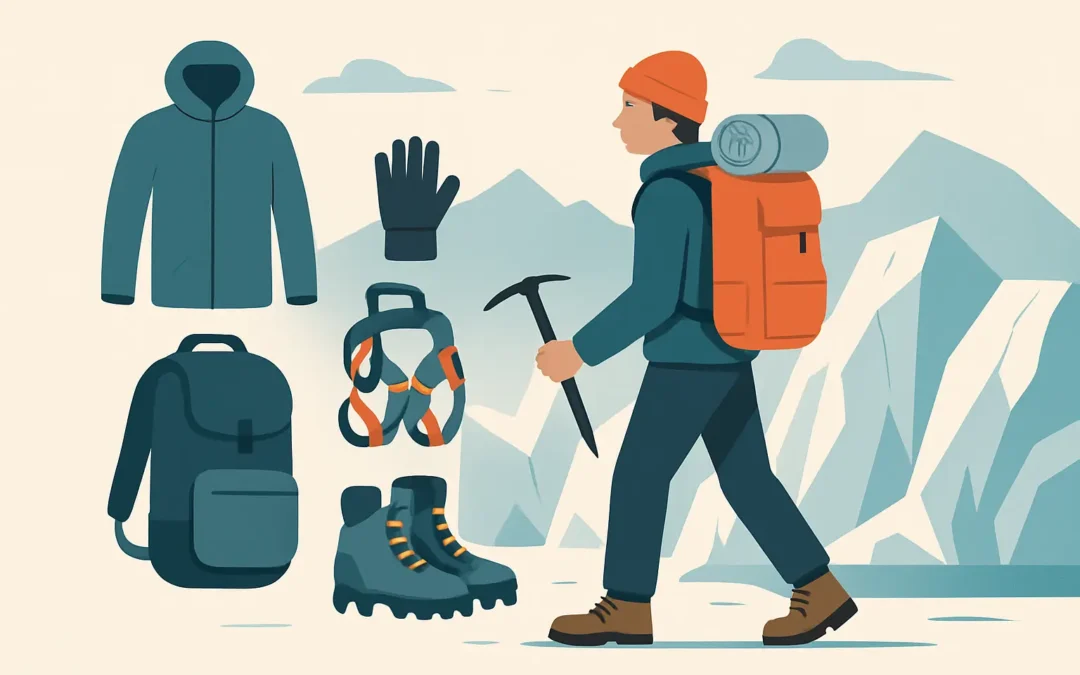
Start with a first layer that wicks away sweat. If you can, choose merino wool or technical fabric. Cotton is treacherous here: it soaks through and then cools. The second layer is your “heater”: a fleece or a lightweight insulated jacket. On top, a windproof and waterproof third layer, ideally with an adjustable hood. If the day is mild, maybe open it up; if the wind picks up on the lake or near the snowdrift, you'll appreciate every adjustment.
On the legs, many people fall short. A quick-drying trekking pant works better than a pair of jeans. If you're cold or in the colder season, add a thermal mesh underneath. And don't underestimate socks: a technical, seamless sock that keeps the foot dry, prevents chafing and gives you real warmth.
Footwear: where you win or lose excursions
On a glacier tour it is normal to step on gravel, mud, wet walkways, rain-polished rock or old snow. Here “sneakers” can be good... until they are not. What is most important is a trekking boot or shoe with good grip and, if possible, a waterproof membrane. You don't need mountaineering to enjoy a glacier from viewpoints, navigation or guided hikes, but you do need stability.
If you wear new shoes, wear them first. Patagonia does not forgive the “small” blister: with humidity, friction and hours on the road, it becomes the protagonist. A simple trick is to carry ready-made anti-blister plasters in your pocket, in case you notice the first hot spot.
Smart backpack: just the right thing, but what saves the day
It's not about carrying half the house. It is about carrying what allows you to adapt without wasting time. A 20-30 liter backpack is usually enough for a full day outing. Inside, prioritize what covers changes in climate and energy.
There are four things that are almost always appreciated: an extra layer (because the wind blows), thin gloves (for cold hands in navigation or viewpoints), a hat or scarf (heat escapes through the head) and a waterproof bag or case to protect cell phone and documents. If you are one of those who take pictures non-stop, also carry a small cloth: condensation and fine rain fog up lenses when you least expect it.
The Patagonian weather: learn how to read it without obsession
Here is a very real “it depends”: your preparation changes according to the season and the type of tour. A clear day with little wind is not the same as a day with intermittent showers. And it is not the same to see a glacier from a viewpoint than to sail close to the front or combine with kayaking.
The most practical thing to do is to assume that it may rain even if the sky looks kind. Always wear a real raincoat (not a “city raincoat” that gives up at the first wind). And think of wind as a separate factor: even if it's not raining, wind can suddenly lower the wind chill. That's why a windproof outer layer is so important.
If you get seasick on a boat, take measures before leaving. Cold and movement can enhance the sensation. Ask for recommendations, eat a light breakfast and avoid going on an empty or overfull stomach.
Safety and respect: what makes the experience great
A glacier is a beautiful and fragile environment. It is also a place where you should not improvise. Stay on the marked trails and always follow the guide's directions. Do not approach unstable edges or leave the group “just for a picture”. The ground can give way, the ice can fracture, and the wet rock is slippery.
On tours approaching glacier fronts, there is a risk of landslides. This is not to scare you, but to make you understand why distances and times are respected. Patagonia is to be enjoyed with your head. That is responsible adventure: excitement, yes; recklessness, no.
Hydration and food: constant energy, no dips
The cold can be deceiving: you may not feel thirsty and still get dehydrated. Carry water and drink regularly. For food, ideally something easy to take out with gloves and that won't turn to stone in the cold. Nuts, bars, simple sandwiches or chocolate work well.
If your tour includes long travel times along the Carretera Austral, think about the pace of the day: hunger hits just when you are far from any store. Better to bring a little extra than to run short.
What to do with your cell phone and camera (so they don't die trying)
Cold drains batteries. If your priority is to photograph that impossible blue of the ice or the reflection in the water, carry your phone close to your body, not in an outside pocket. A compact external battery can be the difference between “I'm out of juice” and “I've got the shots I wanted”.
In humid environments, condensation is common. Keep your equipment in a closed bag when you move from a warm place to a cold one or vice versa. And if it rains, a simple cover or watertight bag will save you from a scare.
Mental preparation: Patagonia is not controlled, it is accompanied.
Some people arrive expecting a postcard-perfect day. Sometimes there is. And sometimes the magic comes in the form of low clouds, fine rain and a wind that makes the water dance. If you come with the idea that the experience depends on blue skies, you're robbing yourself of part of the trip.
Patagonia rewards those who adapt: adjust layers without drama, walk at a steady pace, listen to the guide and let the landscape do its job. When the glacier appears in the mist, the sensation is more intense precisely because it did not come easy.
Choosing the right tour: it's not just “glacier”, it's how you experience it.
Before booking, check the type of experience. Some trips focus on scenic navigation and viewpoints. Others add longer hikes, and some incorporate outdoor activities such as kayaking in cold waters and remote settings. There is no “best” option for everyone.
If you want comfort and a powerful visual impact, a well organized full day is usually ideal: logistics solved, optimized times and a guide that gives you context. If you are looking for something more intense, ask for routes with more walking or combined activities. And if you travel as a couple or with friends, align expectations to avoid the typical “I wanted more adventure” in the middle of the day.
To get around the must-see places in Aysén with a simple reservation and star routes, you can look at options with specialized local operators such as Patagonia Xtreme, especially if you are based in Coyhaique and want to go to places such as San Rafael Lagoon o combine pristine nature with an outdoor approach.
Small details that change everything
Thin gloves allow you to take pictures without freezing your hands. A buff protects your face from the wind. A real raincoat lets you enjoy it even if it's pouring sideways. And a decent pair of socks saves you from that constant dampness that ruins your mood.
If you travel in high season, add another variable: punctuality. In Patagonia, distances are real, and schedules are not decorative. Leave with margin, have your equipment ready the night before and avoid arriving with the “I have to buy such and such” just before leaving.
In the end, preparing for a glacier in Patagonia is an act of respect for the place and for your own experience. Come ready to move, to get a little wet, to feel the wind, and to be silent when the ice creaks. And when you return to your lodge with wet boots and a head full of scenery, you'll be thankful you came prepared - because that's when the magic of the south stays with you.
 English
  Español