
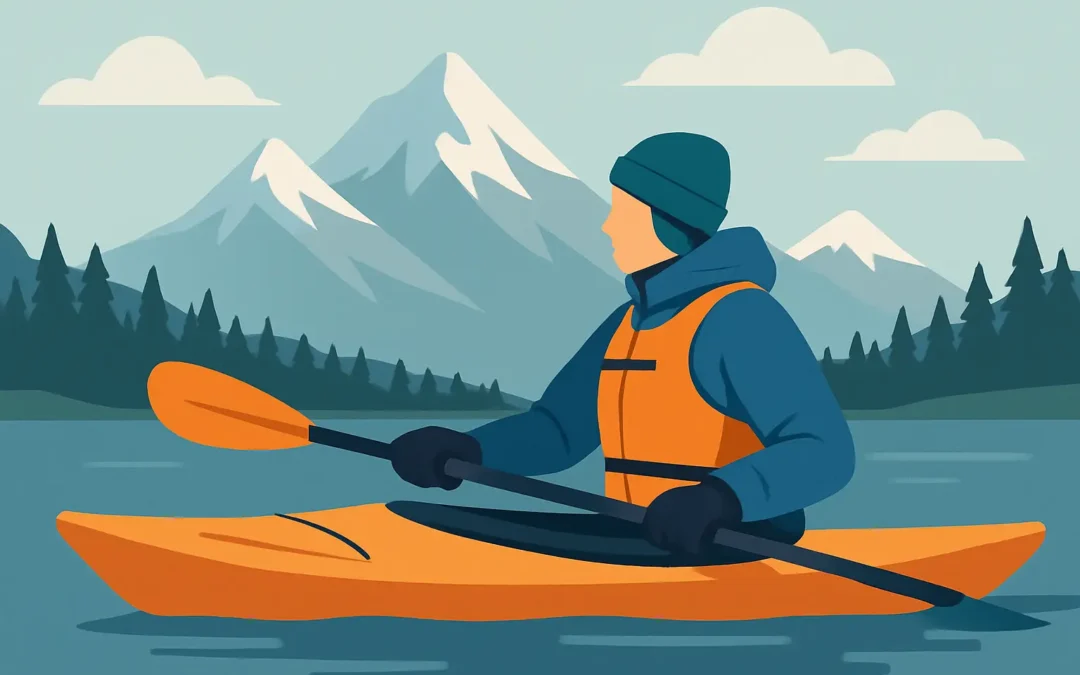
You get into the kayak and, as soon as the paddle enters the water, you understand: in Patagonia the cold does not always come as a storm. Sometimes it's a clean breeze that sneaks up your neck. Or a splash that seems harmless and, five minutes later, leaves you shivering. So when someone asks “what to wear when kayaking in Patagonia,” the answer isn't just to dress warmly. It's about being well dressed to move around, get a little wet and still enjoy the scenery without fighting with your own clothes.
What to wear for Patagonian kayaking: the real rule
The key is not a specific garment, but a system that works when conditions change. In Aysén you can go out in sunshine, paddle in a crosswind and end up with low clouds. If your clothing depends on the day staying “nice”, you're going to be uncomfortable.
The real rule is simple: dress in layers, prioritize fabrics that work when wet and protect areas that lose heat quickly (hands, feet, head). That gives you leeway to adjust on the fly without having to “hold out” until the activity is over.
The base layer: what touches your skin decides everything
This is where the day is won or lost. The base layer must wick away sweat and dry quickly. If you wear cotton, you're likely to end up with that sticky, cold feeling that's unforgiving when the wind blows in.
Merino or technical synthetics work well. Merino is very nice and will hold odors if you wear it several days in a row, but it takes a little longer to dry. Synthetic dries quickly and is usually more durable. In both cases, look for a comfortable fit: snug but not tight, because if it's too loose it doesn't manage moisture well.
For the lower body, a thin thermal tights is usually enough for paddling. If you are very cold or you are going to a particularly exposed place, increase the weight a notch, but without becoming a rigid doll. In kayaking, moving well is safety.
The thermal layer: warmth that doesn't get in the way when paddling
The second layer provides insulation. It's all about balance: you want warmth, but also shoulder and back freedom. A technical fleece or a lightweight synthetic fiber jacket will do just fine. Down is very warm, yes, but in splashy activities it is not always ideal: if it gets wet, it loses some of its insulation and takes time to recover.
If the day is stable and windless, a thin fleece may be sufficient. If there is wind or low wind chill, synthetic fiber is usually the safest bet. And remember: kayaking is all about working the core. If you dress “too much” at the start, you'll be sweating after ten minutes, and sweat is the silent enemy when you stop.
The outer layer: the windbreaker is your best ally
The cold water is noticeable, but the Patagonian wind is the one that brings the temperature all of a sudden down. The outer layer should cut the wind and, hopefully, resist splashing. You don't need to go with extreme gear if your outing is guided and a few hours long, but you do need a reliable barrier.
A waterproof windbreaker or lightweight shell jacket is usually the most practical. Adjustable cuffs and a high collar make all the difference when the water drops start to fall or the breeze becomes insistent. If it also has a hood that doesn't block your vision, it's perfect.
In the pants, many people paddle with tights and a lightweight waterproof pant on top. It's simple, quick and it works. If the outer pant is too stiff, it will limit you getting in and out of the kayak or doing long paddles.
Neoprene or “dry” clothing? Depends on the plan
There are nuances here. Neoprene provides warmth when you get wet and is a classic for water sports. It works very well if there is frequent contact with cold water and you are not going to stay still for many hours. The “but” is that if you go too thick or the day gets warm, you can sweat a lot and feel heavy.
Dry“ type clothing (jacket and pants with membrane, seals and a good zipper) protects from water, but is usually more technical and depends on a good fit. On guided excursions, the operator will usually tell you what is necessary and what is included. If you are not sure, ask: a calm paddle in relatively protected waters is not the same as a day exposed to wind and waves.
Hands: gloves that allow you to feel the blade
Your hands are the first warning that you're underdressed. When they get cold, you lose feeling and grip, and that translates into less efficient shoveling and more fatigue.
Thin neoprene gloves or technical gloves that can withstand splashes are usually sufficient. Avoid bulky gloves: they will make you paddle clumsily and you will end up squeezing the paddle too tightly. If you are cold, you can combine thin gloves with windproof mittens for breaks or stops.
Feet: warmth, grip and a little water assumed
In kayaking it is normal for feet to get wet when entering or exiting. The idea is not to keep 100% out of the water (sometimes you can't), but to keep warm and comfortable.
Thermal socks and neoprene booties are a popular combination. If you wear sneakers, make sure they are closed, with grippy soles and that you don't mind getting wet. What usually fails are the “city” sneakers: they get soaked, heavy and take forever to dry.
If you are going in cold weather, consider a neoprene sock or a thicker thermal sock, but be careful: if it is too tight, you will cut off circulation and get colder, not colder.
Head and neck: the extra that changes the day
A thin beanie under the hood or a thermal tape helps a lot when the wind picks up. And the neck is a critical area: a buff or neck warmer made of technical fabric allows you to seal out the cold without feeling weighed down.
On bright days, add sunglasses with good support. In Patagonia the light can be intense, and if you are near ice or light surfaces, even more so. Sun protection also counts: cold does not take away the sun.
What to carry in your backpack (without carrying a load)
Even if the question is “paddling clothes,” the reality is that before and after matters. You finish the activity, stop, get out of the kayak and your body stops producing heat. That's the moment when an extra piece of clothing saves the day.
Bring a light warm jacket for the post, and a minimal dry change (socks and base layer, for example) if you know you might get wetter than usual. If you have a watertight bag, There is nothing sadder than looking for “the dry” and discovering that it is also wet.
Typical mistakes when dressing for kayaking in Aysén
The first is to trust that “I'm not going to get wet”. Even in calm water, a badly angled paddle, a gust of wind or a landing maneuver will leave you soaking wet.
The second is to get warm enough to stand and watch the scenery. Paddling warms you up. If you come out already sweating, you're getting into a cycle of wet and cold.
The third is to forget about the extremities. You can wear the best jacket in the world, but if your hands freeze or your feet are wet and cold, the whole body complains.
Adjust your clothing to the type of experience
A short outing on a steady day is not the same as a long excursion in changing weather. On iconic routes of the Southern Highway, Where the landscape leaves you speechless and the weather can get serious without asking permission, it is advisable to go with a margin: an extra layer in the backpack, suitable gloves and a good windbreaker.
If you book a guided excursion, leverages local knowledge. A specialized operator such as Patagonia Xtreme usually gives you specific indications according to the route and the season, and that is worth gold: here the detail makes the difference between “I had a good time” and “I couldn't wait to finish”.
The best sign that you are well dressed
It's not that you're an astronaut, or that you don't feel cold at all. It's that you can concentrate on paddling, look at the water, listen to the silence of the south and notice how the landscape becomes wilder with each paddle. If your clothes disappear from your head, you're perfect.
Patagonia does not ask for heroism. It asks for respect and preparation. And when you dress with intention, the prize is simple: to be there, truly present, while the wind draws ripples on the water and you advance at your own pace, comfortable, safe and eager for more.
 English
  Español