
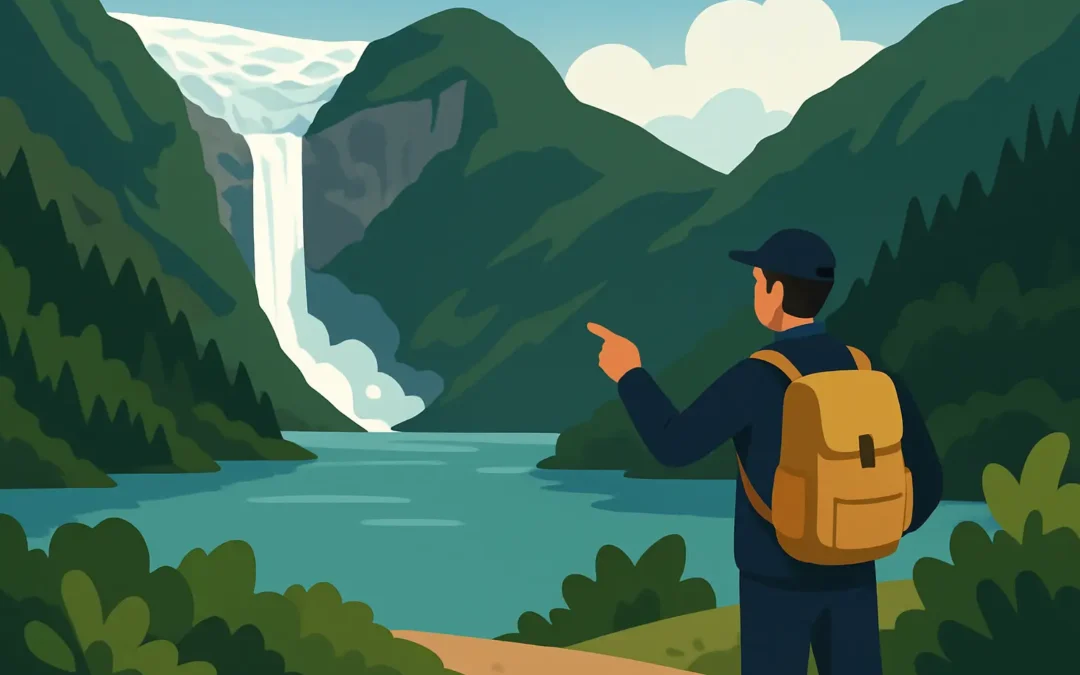
You arrive at the Carretera Austral with that mixture of anxiety and desire for great scenery. And suddenly, after a wet and green curve, the forest opens up and you understand why Queulat is a name that is pronounced slowly: here Patagonia does not pose, it happens. If you are thinking of doing a full day in Queulat Park, the key is not just to “go and come back”. The key is to choose well what to see, at what pace and with what expectations so that the day explodes in your memory - not in your legs.
Why a full day in Queulat Park works so well
Queulat is in the heart of the Carretera Austral, in a strip of land where the cold Valdivian rainforest becomes almost cinematographic: giant ferns, moss-covered trunks and rain that comes and goes as if it were also traveling. In a full day you can take in the most iconic of the park - the Ventisquero Colgante - and, if the weather is good, add viewpoints, waterfalls and that humid silence that only exists in Aysén.
The “but” is real: being a park of high demand in season, there are schedules and walking times that should be respected. A full day is enough for the essentials, but not to “see everything”. And that's good, because Queulat is best enjoyed when you are not running after a checklist.
What not to miss in a full day Queulat Park
There are beautiful places, and then there's the Hanging Glacier. It's the icon, yes, but it's also a master class in live geology: a tongue of ice suspended in the mountain, feeding waterfalls that cascade down into the valley.
Hanging Glacier: the highlight
The typical experience combines a forest trail and a final stretch to the viewpoint. It is not a technical hike, but it does require perseverance: wet soil, roots, natural steps and the typical climb that reminds you that you are in Patagonia and not on an urban walk.
The reward is brutal. If the day is clear, the ice looks textured, and the slides sound in the distance like controlled thunder. If it's cloudy, the snowdrift appears and disappears in a haze - and there's magic in that uncertainty, too.
Short trails and stops that are worth gold
If your logistics allow you margin, Queulat has corners that round out the day: secondary viewpoints, nearby waterfalls and stretches of forest where the pace slows down and the trip becomes sensory. There is no need to accumulate kilometers. Sometimes it is enough to walk ten minutes slower and look up: lianas, lichens and a green that seems exaggerated.
Realistic itinerary: how to experience the day from Coyhaique
A full day from Coyhaique means getting up early, because the Carretera Austral can be enjoyed without haste. Times change according to weather, traffic and stops, but the general outline usually feels like this.
You leave early heading south. The route is already part of the tour: rivers that run with force, mountains that rise suddenly, bridges and spontaneous viewpoints where you feel like stopping even if they are not “marked”. You arrive at the park, coordinate entrance, adjust equipment and face the main hike.
Then comes that key moment: the return is not just “to go back”, it is done with the feeling of having been inside a living place. If there is enough time, a stop to stretch the legs, eat something hot or just breathe outside the car turns the trip into a complete experience.
This is where the difference between going on your own without references and doing it with a operation ordering times, stops and group rhythm. If you feel like going with logistics and a local guide, at Patagonia Xtreme you have the full day structured with an outdoor focus and the park as the protagonist.
What to bring to Queulat (and what usually goes wrong)
Queulat does not ask you to be an expert, but to come prepared. What fails the most on a day in the park is not physical condition: it's the wrong equipment for rain or cold.
A real waterproof jacket makes a difference. Not “waterproof”, but waterproof. In the same vein, footwear should grip well in mud and roots; an urban sneaker can turn a precious hike into a constant negotiation with the ground.
In the backpack, less is more, but there are basics that save the day: an extra thermal layer, thin gloves, hat, water and some food that can withstand humidity. If you carry a camera or cell phone for photos, a dry bag or waterproof case avoids the typical drama of a wet screen just when the snowdrift appears.
Best time for a full day Queulat Park (depends on your style)
There is no such thing as “the” perfect season, there is the one that fits you.
Summer: longer days and more movement
From December to March you have more daylight hours and, in general, nicer conditions for walking. On the other hand, there are more people and punctuality should be taken seriously. This is the ideal time if you want to maximize the chances of open skies and a comfortable experience.
Autumn: color and less haste
The forest changes tone and the park feels more intimate. It may rain just the same (or more), but the atmosphere is one of those that sticks with you: leaves, mist, cold air and that feeling of being far away from everything.
Spring: live flows
The watercourses are going strong. The waterfalls feel more powerful and the greenery is pushing again. It's a great time if you like Queulat in “maximum energy” mode, assuming the weather can be more unpredictable.
Winter: for those looking for raw Patagonia
If you are attracted to the less domesticated Patagonia, winter offers spectacular scenery, but with more limitations: cold, rain, less light and possible restrictions depending on conditions. It's a trip of attitude. If you go, go with margin, adequate clothing and a flexible mentality.
Going on your own or on a tour? The honest decision
Going freewheeling gives you total control: you stop wherever you want and adjust your pace to suit you. If you enjoy planning, drive comfortably on long routes and don't mind dealing with weather changes, it can be a good option.
A full day tour, on the other hand, buys peace of mind. You forget about coordinating times, long driving, ticket management and the typical question of “will we arrive with light”. In addition, having a local guide adds context: you don't just see the snowdrift, you understand the place, read the forest and make better decisions if the weather changes.
What is “convenient” depends on your trip. If you are coming to Aysén for a few days and want to ensure an unmissable experience without friction, the tour usually win. If you are traveling the Carretera Austral with time and you like to improvise, going on your own is a better option.
Terrain tips to make the day go smoothly
Patagonia rewards those who adapt. A full day in Queulat is a great experience when you leave room for the weather and don't obsess about the perfect photo.
Start early, because the light and hiking times are more enjoyable without pressure. Keep a steady pace on the trail: no need to run, just get to the viewpoint with energy. And accept that rain does not ruin the park - it defines it. When it rains, the forest shines, it smells intense and the water sounds everywhere.
If the sky closes just when you're up there, wait a bit. Queulat has this habit of opening windows of visibility in minutes. Sometimes the snowdrift appears as if someone lifted a curtain. And when it happens, you understand: it wasn't just a glacier, it was time.
Close the day with a simple idea: don't try to control Patagonia, try to be present. Queulat is not conquered, it is visited with respect - and with the desire to return.
 English
  Español