You leave Coyhaique with your mate still hot and, a few hours later, you are in front of a world of blue ice, salty wind and silence broken by the creaking of the glacier. Laguna San Rafael has that magic of the south that leaves you with your mouth open... and it also has changeable weather, humidity and cold that sneak in if you trust it. Therefore, rather than “carrying a lot of things”, the key is to carry the right things.
If you are wondering what to bring to Laguna San Rafael, Think of two simple ideas: you are going to a remote place where the weather can turn in minutes, and the experience is best enjoyed when you are dry, warm and with your hands free to take pictures, toast with millennial ice or paddle if you are outdoors.
What to take to Laguna San Rafael according to the actual climate
In Patagonia you don't “just look at the forecast”. You look at it, yes, but you interpret it with humility. In San Rafael you can experience clear sunshine, fine rain and strong gusts in the same day. In addition, the glacial environment cools the atmosphere, especially when you are still on deck or looking at the ice front.
That's why the layering approach works: you adapt without suffering and without loading up an entire closet. The trick is for each layer to do its job and, together, allow you to ventilate when the intensity rises or close up when the wind gets serious.
The first layer: comfort and sweat management
Start with a thermal or technical t-shirt. If you are one of those who get hot walking or moving in the boat, this layer makes a difference. Avoid cotton: when it gets wet from sweat or rain, it takes a long time to dry and cools you down.
On the legs, thin thermal tights or technical underpants will give you some leeway if the day is cold. If you are cold, this is your secret card.
The middle layer: warmth without bulk
Here a fleece or a fiber/synthetic jacket is the norm. Down is very warm, but if it gets wet it loses performance and in Aysén humidity is the rule. If you take down, it should be as a “plan B” inside a waterproof bag or very well protected.
The outer layer: your insurance against wind and rain
The most important piece of clothing equipment is a waterproof and windproof jacket with a hood that closes well. You don't need an expedition jacket, but you do need one that will really stand up to rain and gusts. When you're looking at the glacier, the wind can feel colder than the thermometer says.
On the bottom, waterproof or at least water-resistant pants. Many people remember the raincoat and forget about the legs, and then spend half a hike uncomfortable and freezing.
Shoes: the detail that saves the day
The ground may be wet, muddy or slippery depending on the landing point and the logistics of the tour. Waterproof hiking boots with grippy soles are ideal. If you don't have boots, hiking shoes with a waterproof membrane may work, but assume that in heavy rain you will have a worse time.
Avoid plain urban sneakers. It's not about outdoor posture: it's about safety and comfort.
Socks count too. Wear technical socks or wool socks (merino type) and, if you have cold feet or are going to be there for long hours, pack a spare pair. Changing socks in the middle of the day can magically restore your spirits.
Accessories for cold and wind (yes, even if it's sunny)
Laguna San Rafael can give you a beautiful sun that can be deceiving. On deck or near the ice, the wind gets up your neck and leaves you stiff if you go “bare-chested”. Three small items are worth gold: hat, buff/braga and gloves.
Gloves don't have to be huge, but they do have to be windproof. If you are going to take photos, thin gloves with good mobility are more practical than rigid ski gloves. And if it rains, make sure they are made of material that doesn't get soaked quickly.
Sunglasses too: light reflects off water and ice, and you can end up with fatigued eyes without realizing it. The same goes for sunscreen. In Patagonia you can get sunburned with cold and clouds, especially on your face.
Backpack and water protection
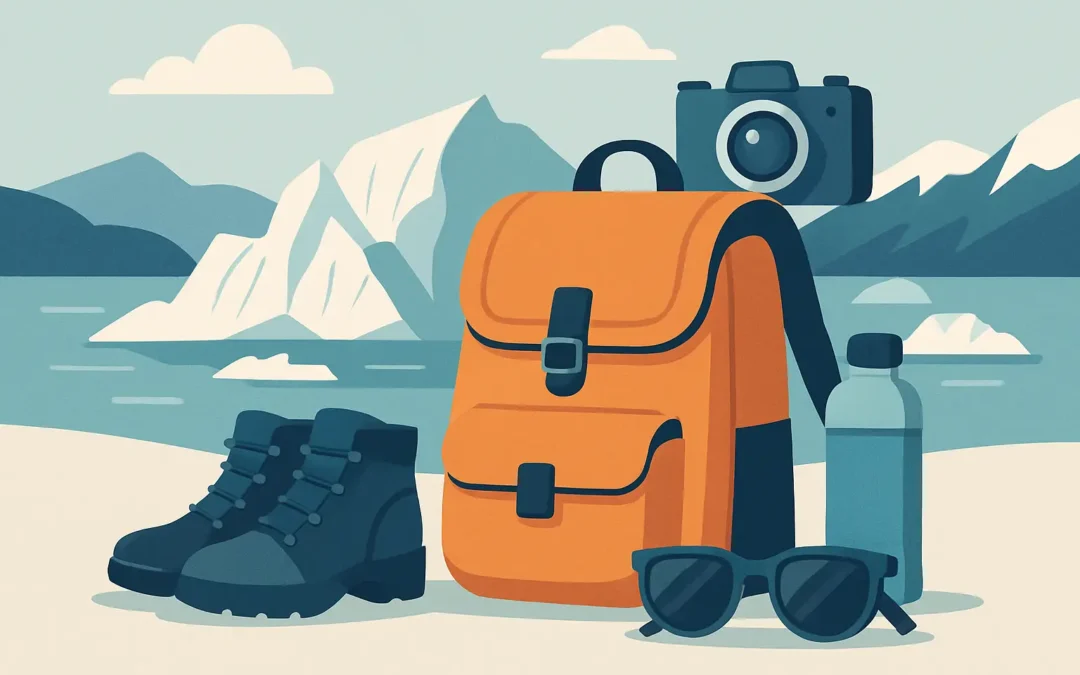
You don't need a giant backpack. With 15-25 liters is usually enough for a full day. What you do need is organization: even if your backpack says “water resistant”, the Patagonian rain puts anyone to the test.
The most practical thing to do is to use a waterproof cover for your backpack or carry waterproof bags or zip bags for the important things: cell phone, wallet, documentation, batteries and a dry garment. If you are going to use a camera, a padded bag and extra protection against splashes will save you a lot of trouble.
Hydration and food: energy without complication
It depends on the hike and what your program includes, but there's one basic that never fails: a reusable bottle. The cold air is tricky and makes you drink less, but you still get dehydrated.
For snacks, think of things that will hold up well and won't turn to stone in the cold: nuts, bars, chocolate, a compact sandwich. If the day gets longer or the weather gets intense, having something on hand improves your mood and your body temperature.
What to bring to Laguna San Rafael if you do kayaking or outdoor activities
If your experience includes kayaking or other near-water activities, the rule is simple: anything that keeps you dry and mobile adds up. Sometimes the operator provides specific equipment, but you can bring extras that make a difference.
A spare thermal T-shirt and socks stored in a waterproof bag is the smartest “just in case”. If you get splashed or wet, changing quickly prevents the cold from setting in.
It also helps to carry a small microfiber towel. It dries quickly, doesn't take up any space and is good for hands, face or gear. And if you wear glasses, a chamois or cloth to clean them is a godsend when it rains hard.
Technology and photos: don't let your battery ruin the moment
You will want to take pictures. And not only of the glacier: of the impossible blue of the ice, of the floating icebergs, of that feeling of being on the edge of the untamed.
Cold drains batteries. Carry your cell phone close to your body (inside pocket) and, if you can, an external battery. If you carry a camera, an extra battery is almost mandatory.
A practical tip: prepare your gear before heading out on deck. Opening backpacks, changing lenses or rummaging through wind and rain is a recipe for something to get wet or fall out.
Little extras that seem like a “whim” until you need them
There are things that are not essential... until they are. A first aid kit with band-aids and some protection against chafing will save you if your footwear plays a trick on you. A lip balm prevents chapped lips from wind and salt spray. And if you are sensitive to seasickness, it is better to take your usual solution and take it in time: when the discomfort appears, you are already late.
It's also a good idea to carry a bag for your garbage and another for wet clothes. Keeping your pack tidy when everything is wet is easier if you think about it from the start.
What NOT to bring (and why)
Overloading yourself takes away your freedom. On full day trips, a heavy backpack is noticeable. Avoid carrying “just in case” bulky clothing that does not match the layering system.
It is also not a good idea to carry items that will be damaged by unprotected moisture, such as loose documents or uncovered devices. And if you go with cotton clothing as a base, assume that comfort is short-lived when rain or wind appears.
Adjust your luggage to your travel style
Not everyone travels the same. If you are one of those who feel cold easily, prioritize a warmer midlayer and better gloves. If you are very active and get overwhelmed by the heat, go for breathable layers and a jacket that ventilates well.
If you are traveling the Carretera Austral for several days, the smart thing to do is to reuse a “Patagonia kit” that will work for Queulat, Mármol and San Rafael: technical layers, reliable waterproofs and responsive footwear. It's less luggage and more safety.
For those who want to have a rounded experience, there are local operators that already have the rhythm of the weather and the times. At Patagonia Xtreme we work these emblematic routes from Coyhaique with an outdoor and ecotourism approach, so that you can concentrate on what is important: being there, breathing that cold air and looking at the millenary ice without rushing.
Closing: prepare just enough and be surprised
Laguna San Rafael doesn't ask you to be an expert, but it does ask you to respect it. Carrying layers, a real raincoat and a couple of thoughtful extras is not paranoia: it's the difference between “making it through the day” and living it with that goofy smile of adventure accomplished. Leave room in your pack for the one thing that always comes back to you: the feeling of finally being in front of a glacier that creaks like it's alive.
 English
  Español