
You wake up early in Coyhaique with that mix of sleep and adrenaline that only the Carretera Austral can give you. Outside the air bites a little, and in the thermos the coffee tastes like a promise: today it's time for millenary ice. The excursion to San Rafael Lagoon from Aysén is one of those that you don't “do”, you remember. And if you're looking at options, here's an honest review, from the ground, so you know what to expect - and what not to expect - before you book.
Laguna San Rafael excursion review from Aysén: what it feels like
The first sensation is not the glacier. It is the scale of Patagonia. Long distances, light changes in minutes, mountains that appear and disappear among low clouds. The route to the sea access (depending on the operator and logistics) is part of the experience: it is not a simple transfer, it is the prologue to the show.
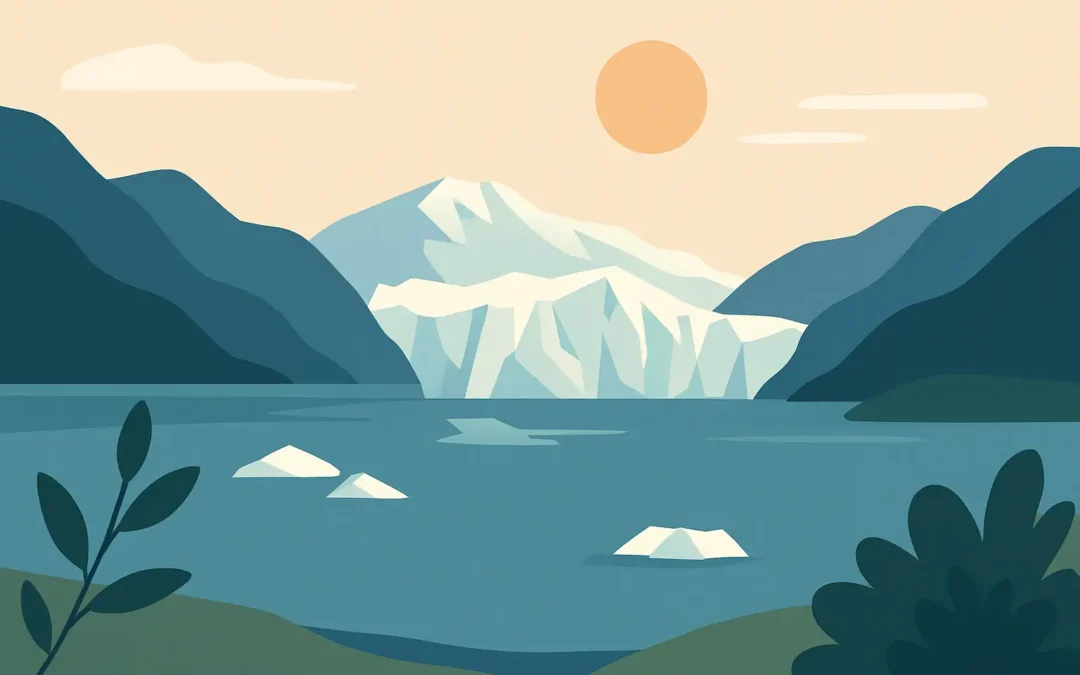
When you finally approach the lagoon, the landscape changes tone. The green becomes colder, the air becomes more humid, and the water begins to look like something else: a surface that reflects the sky with a metallic sheen. And then it happens: the ice front appears. It is not a distant postcard. It is a living wall, with blue cracks and impossible whites, and with a sound in the background that you don't expect - crunching, small fractures, dry thumps when some piece falls into the water.
Here the emotion is not just “pretty”. It is that feeling of being in front of something that overcomes you and puts you in your place, but without drama: pure nature in its raw state.
How the day usually goes (without selling you smoke)
The excursion is usually a full day trip. You move around a lot, and the schedule is early because the times in Aysén are important: road, embarkation, navigation, disembarkation. It is not the kind of tour to go “without haste”. It is intense, but well resolved when the logistics are clear.
Normally the day is divided into three sections: the initial land transfer, the navigation through channels and fjords, and the stellar moment in the lagoon in front of the glacier (plus the return, which takes a long time if you do not manage well).
The navigation section is more than a bridge between A and B. If the day is clear, you'll see steep forest-covered slopes, thin waterfalls cascading from green walls and, with luck, seabirds and some marine mammals in the distance. If the day is closed, the atmosphere becomes more mysterious: low mist, fine rain, a silence broken only by the engine and the water lapping against the hull.
The actual time in front of the glacier depends on conditions and permits. Here it is advisable to go with the right idea: you will not always be able to “get close enough to touch” the ice. Sometimes there are restrictions due to safety or the state of the glacier front. The experience is still brutal even if the viewing distance changes.
The best (and the least glamorous) of the experience
The best part is obvious when you experience it: seeing ancient ice floating like sculptures, noticing the cold coming out of the lagoon and feeling like you are in a corner of the world unlike anything else.
It also adds a lot when you go with guides who really know the area. Not only for safety, but also because they give you context: where the glacier has retreated, what species can be seen, how to read the weather. This turns the excursion into something more complete, not just a “photo and that's it”.
The least glamorous thing: fatigue. It's a long day. If you come accumulating several days on the road, it shows. You may also get horizontal rain, wind and wet cold, the kind that gets into your bones even if you are not at extreme temperatures. And, depending on the state of the sea or the fjord, navigation can move. If you are sensitive to seasickness, be prepared.
Weather in Laguna San Rafael: the south rules here
In Aysén the weather does not “accompany”. The weather decides.
You can leave with an open sky and arrive in the rain. You can have a perfect window of light for ten minutes in front of the glacier and then close it. That is why this review insists on the same thing: the excursion is not enjoyed by “guarantees”, it is enjoyed by attitude and preparation.
The real cold is felt mostly in the lagoon and on deck during sailing. Even in milder months, the wind and humidity make you want layers. And if it rains, the difference between having a good time or a fair time is often as simple as wearing a good waterproof jacket and a pair of pants that won't soak through.
What to wear to enjoy (and not suffer)
You don't need to go as an expeditionary, but you do need to go with your head. What makes the most difference is to dress in layers and carry dry spares.
Wear a first layer that wicks away perspiration, a thermal layer (lining or light down), and a third waterproof layer. On your feet, comfortable shoes with grippy soles, and socks that won't freeze at the first splash. A hat and thin gloves are small, but on deck they turn to gold.
In the backpack, some food support (even if you have lunch included, the body asks for energy), water, sunscreen if there are clear (the reflection of water and ice is deceiving) and a case for the cell phone or camera. If you want photos, think about the battery: the cold lowers it faster.
Is it worth it if you have already done Marble or Queulat?
Yes, but for a different reason. The Chapels and Marble Cathedral They catch you by color and shape, by that hypnotic turquoise and the feeling of being inside a natural work of art. Queulat will catch you for its verticality and humid jungle, for the hanging snowdrift and waterfalls.
San Rafael is another register: it is scale and time. It is not a marble cave or a viewpoint. It is an active glacier in a remote lagoon. If your thing is to collect “icons” of the Carretera Austral, this is one of the great ones.
Now, the nuance: if you are looking for a short or “light” tour, you might want something closer to Coyhaique first. This excursion is for people who want a full day, with an adventure mentality and a margin for unforeseen events.
Booking tips and expectations (to get it right)
Book in advance if you are traveling in high season or with fixed dates. San Rafael is not an urban tour where you improvise the same day. Here there are quotas, logistics and conditions that can move schedules.
Always ask what is included in the price: transfers, navigation, food, entrance fees or taxes, equipment if there are additional activities, and cancellation policy due to weather. It's not about mistrust, it's about traveling well.
And one more human tip: don't plan a night out the day before. It sounds basic, but it sets the day. You're going to get up early, you're going to move, and you're going to want to be fine when the glacier shows up.
A well-resolved option from Coyhaique
If your base is Coyhaique and you want an outing with closed logistics, clear prices and outdoor focus, you can look at the excursion to Laguna San Rafael with Patagonia Xtreme. The advantage of booking online is that you reduce cross messages and make sure you have your reservation ready for one of Aysén's star routes.
Who is this tour for and who is it not for?
It is perfect if you travel as a couple or with friends, like wild landscapes, and enjoy the feeling of going “beyond” the obvious. It also fits if you have average outdoor experience: you don't need to be an expert, but you do need to be willing to be cold, get a little wet and move for many hours.
It is not the best choice if you travel with very little tolerance to the uncertainty of the weather, if you are overwhelmed by long transfer times, or if you are overcome by seasickness and do not want to take medication. In those cases, Aysén has shorter and more controllable alternatives.
The moment they don't tell you: when silence wins
There is a typical moment. You've already taken pictures, you've already looked at the blue of the cracks, you've already heard some small block fall into the water. And suddenly you stand still. The group lowers its voice. All that remains is the wind, the engine in the distance, and that rare silence of big places.
That is when the excursion ceases to be an “activity” and becomes an experience. You don't need to understand glaciology or recite data. Just be present. Because in Laguna San Rafael, Patagonia is not explained too much. You feel it.
Go with the right clothes, with the day free of rush and willing to let yourself be surprised, even if the sky decides to get serious. The rest - the photos, the cold on your face, the impossible blue of the ice - comes on its own.
 English
  Español